
The Sensex and Nifty spiralled lower for the fourth session on the trot on Wednesday as investors remained on edge ahead of US inflation data, which will give clues on the Federal Reserve's policy tightening trajectory. Unabated selling by foreign institutional investors and a jump in crude prices also weighed on sentiment, traders said. Despite a firm start, the 30-share BSE Sensex failed to carry forward the momentum and ended at 54,088.39, lower by 276.46 points or 0.51 per cent. During the day, it tumbled 845.55 points to 53,519.30.

Equity markets maintained their winning momentum for the second day in a row on Thursday, with the Sensex surging over 874 points, propelled by index majors Reliance Industries, Infosys and HDFC twins amid a mixed trend in global markets. The BSE benchmark Sensex zoomed 874.18 points or 1.53 per cent to finish at 57,911.68. During the day, it jumped 954.03 points or 1.67 per cent to 57,991.53. The NSE Nifty rallied 256.05 points or 1.49 per cent to 17,392.60.

With the Nifty50 just about 3 per cent away from its all-time closing high of 18,812 points, analysts at BofA Securities suggest investors book profit. Their reasons for the advice include risks like the possibility of a cut in corporate earnings growth forecasts, high valuation (one-year forward P/E of 19.5x), interest rates staying elevated for longer-than-expected and credit tightening. Going ahead, they expect the Nifty50 index to drop to 16,000 levels - down nearly 12 per cent from the current level of 18,255 points, which they believe would be a good time to buy.
Equity benchmarks began the week on a downbeat note on Monday, weighed by heavy selling in market heavyweight Reliance Industries and persisting weakness in global bourses. The rupee plunged to its lifetime low against the US dollar amid unabated foreign fund outflows, underscoring the risk-off sentiment prevailing globally as central banks embark on policy tightening to tame soaring inflation. Slipping for the second straight session, the 30-share BSE Sensex shed 364.91 points or 0.67 per cent to close at 54,470.67.

Equity benchmarks Sensex and Nifty ended marginally lower on Tuesday as investors booked profits at higher levels amid a mixed trend in global markets.

The benchmark indices have rallied 28 per cent this year, while the broader market has outperformed

In the year to date, 61 PSUs have lost an average of 22 per cent, with five companies losing more than half their share value. The BSE PSU index is down 10.6 per cent.

FIIs pump in $1.4 billion in March, after pulling out $2.9 billion in Jan-Feb.

Equity benchmarks Sensex and Nifty halted their five-day rally on Tuesday and settled deep in the red, mirroring weak global markets, with decline in index heavyweights Reliance Industries, Infosys and HDFC Bank. Despite opening with gains of over 200 points, the 30-share Sensex turned highly volatile and tumbled 709.17 points or 1.26 per cent to close at 55,776.85. During the day, the benchmark index plunged 1,067.07 points or 1.88 per cent to 55,418.95. The broader NSE Nifty also declined 208.30 points or 1.23 per cent to close at 16,663.
Benchmark equity indices Sensex and Nifty on Tuesday spurted by over 2.5 per cent to log their best single-day gains in three months, propelled by heavy buying in metal, energy and banking stocks amid a global rally in stocks. The 30-share BSE benchmark zoomed 1,344.63 points or 2.54 per cent to settle at 54,318.47 points with all of its constituents closing with gains. During the day, it jumped 1,425.58 points or 2.69 per cent to 54,399.42. The broader NSE Nifty rallied 417 points or 2.63 per cent to finish at 16,259.30 points.
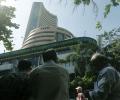
BSE benchmark Sensex plummeted over 388 points to close at 58,576.37 on Tuesday, tracking weakness in index majors Wipro, RIL and Bharti Airtel amid a weak trend in global markets. Investors also remained cautious ahead of crucial macroeconomic data announcements -- industrial production for February and inflation rate for March -- post trading hours. The Sensex declined 388.20 points or 0.66 per cent to settle at 58,576.37. During the day, the benchmark tanked 666 points or 1.12 per cent to 58,298.57.

'Just the amount of work which is there just to become more and more successful in banking. For this to happen you need to have leaders who understand technology.'

Sliding for the fourth straight day, the BSE Sensex shed 152 points in choppy trade on Wednesday amid mixed global cues ahead of the US Federal Reserve's policy decision.

Powered by a rally in index heavyweight Reliance Industries, equity benchmark Sensex broke its four-session losing run to close above the 55,000-mark on Thursday despite a weak trend overseas. Investors made a cautious return to IT, pharma and bank stocks after their recent sell-off. However, a depreciating rupee and persistent foreign fund outflows capped the gains, traders said. Overcoming a lacklustre start, the 30-share BSE Sensex surged 427.79 points or 0.78 per cent to close at 55,320.28.

'Overtightening of monetary policy by central banks and the spread of new Covid variants, which may force governments to restart lockdowns or restrict mobility.'

In the past 12 months, such earnings have grown in double digits in Europe, the US, Japan and South Korea.

With a rise of around 30 per cent in the benchmark index S&P BSE Sensex, 2014 has been the best year for Indian equity markets since 2009, when the benchmark index surged 81 per cent.

After a sharp sell-off in the past two months, overseas investors were once again seen turning bullish on Indian equities. FIIs bought shares worth Rs 63.5 billion in the past five sessions, their highest weekly investment tally in many months.

Markets and blue chip stocks may see a downward correction in short-to-medium term.

Market benchmarks gave up intra-day gains to close in the red for the sixth session on the trot on Friday, capping a bruising week which saw a massive dash for safety amid rate hikes by global central banks and fears of slowing growth.

However, it is noteworthy that foreign investors pumped in money on the day of election results as the mandate became clear

The current valuation is 38 per cent higher than the 10-year average of 22x and over 50 per cent higher than the 20-year average of around 20x.
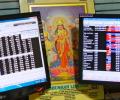
India has always been a good bet in relative terms during crises/turbulent times in emerging markets (EMs).

ONGC was the top gainer in the Sensex pack, surging around 7 per cent, followed by IndusInd Bank, Infosys, Tech Mahindra, Reliance Industries, HCL Tech and TCS. On the other hand, HDFC, ICICI Bank, Axis Bank, SBI and M&M were among the laggards.

The sentiment around Indian equities remains positive and unchanged.

'It has a natural inclination to foster as much competition among civilian politicians as possible.'

Equity indices gave up early gains to close in the red for the third session on the trot on Wednesday, weighed by selling in banking and finance counters amid inflationary pressures and persistent foreign fund outflows. A weak rupee and lacklustre global cues also kept buying sentiment in check, traders said. The 30-share BSE Sensex opened on a firm footing but failed to hold on the momentum, finishing 237.44 points or 0.41 per cent lower at 58,338.93. On similar lines, the broader NSE Nifty dipped 54.65 points or 0.31 per cent to close at 17,475.65.
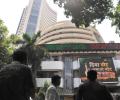
After a positive opening, the 30-share BSE Sensex suddenly faced selling pressure in late-afternoon trade. It finally settled just 5.67 points, or 0.01 per cent, lower at 39,586.41.

From the pandemic shocks to state polls to global trends, a raft of sentiment drivers are expected to steer the Indian stock market in 2022 after a historic year of massive investor returns and milestones. The Union Budget, which will be closely watched for further reform moves, and quarterly earnings of corporates will be among the developments on investors' radar amid global central banks moving towards tighter interest regime in the wake of inflationary pressures. The year 2021 was rewarding in a big way for equity investors.

But experts say downside limited, pockets of opportunities for investors

Titan was the top gainer in the Sensex pack, rising around 4 per cent, followed by HDFC, Nestle India, IndusInd Bank, UltraTech Cement and Bharti Airtel. On the other hand, Bajaj Auto, Tata Steel and NTPC were the laggards.

Though the markets have lost ground since the past few sessions, analysts do not seem worried.

Top losers in the Sensex pack included Yes Bank, Vedanta, IndusInd Bank, Tata Steel, L&T, SBI, NTPC, Kotak Bank, HDFC, HDFC Bank, PowerGrid, Infosys and ITC, falling up to 4.18 per cent.

UltraTech Cement was the top gainer in the Sensex pack, rising 3.06 per cent, followed by IndusInd Bank, ICICI Bank, HDFC Bank, Titan, Axis Bank, SBI and Reliance Industries. NSE Nifty advanced 78.35 pointsto close at 14,814.75.

SBI was the top gainer in the Sensex pack, jumping around 3 per cent, followed by Kotak Bank, Axis Bank, Bajaj Auto, Tech Mahindra, UltraTech Cement and PowerGrid. NSE Nifty rose 36.40 points to 15,337.85.

Market benchmark Sensex tumbled over 323 points after an intense last-hour sell-off on Wednesday, triggered by losses mainly in index heavyweights Infosys, Reliance and HDFC.
The combined profit before tax of 748 companies, which have declared their results for Q1FY21, is down 46 per cent YoY. Their net sales went down by a quarter as the Covid-19 lockdown led to a sharp fall in economic activity.

Through the past 12 months, the Bank Nifty has risen 55%

As the world celebrated International Day of Persons with Disabilities (PwD) on December 3, corporate India has kept up with efforts to make workplaces more inclusive and accessible. Organisations across sectors are taking initiatives such as equipping offices with practical work tools like Braille-friendly and voice-enabled lifts and screen readers. While inclusion has gained pace, only 11.3 per cent (or 3.4 million out of 30 million) Indians with disabilities have jobs.

Markets ended weak tracking the expiry of April derivative contracts.
 © 2026 Rediff.com - Advertise with us - Disclaimer - Privacy Policy - Sitemap - Feedback - About us - Terms of use - Grievances